Posted On: Monday - June 29th 2026 9:09PM MST
In Topics: History
... yesterday. Ooops. Peak Stupidity hardly ever posts on Sundays. However, that's not our real excuse. I've dropped the ball on posts about QuarterMill* American Revolutionary War battles and events and therefore didn't even see this coming until reading a ZeroHedge article this morning.
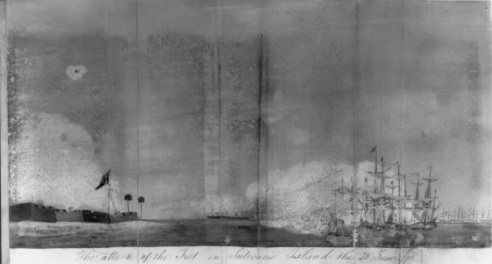
There was no photography, and the painting is pretty worn out.
I like that ZeroHedge posted a History article, with basically no politics involved... unless your long-lost ancestors were Lobsterbacks, and you're still sore about the whole thing. From one Alan Wakim of The Epoch Times, it was 250 Years Ago: South Carolina Defeats The British Empire.
I guess we can still do this:
It was a quarter Millennium yesterday.A British Navy armada under had come down from New York and, having given up on occupying coastal North Carolina, headed to Charles Towne, at the time, the 4th biggest city in the Colonies.** In command was General Henry Clinton. (Who will rid us of these turbulent Clintons?) British-born General Charles Lee headed the recently created "Southern Department" of the Continental Army.
Colonel Moultrie led his boys in the fray.
Fort Sullivan had Palmetto logs for style.
They could catch a cannon ball from half a mile.
So let me introduce to you,
from Charles Towne cross 250 years.
It's William Moultrie and those British tears....
British vessels were spotted in late May taking soundings and gathering intelligence. On May 31, a Patriot horseman arrived at Rutledge’s headquarters to inform him that a massive fleet had been spotted on the horizon.
On June 1, the British armada arrived and dropped anchor outside the harbor. For the next several days, they searched for accessible crossing channels among the shallow sandbars.
On June 4, Lee arrived with his staff and assumed command. When he inspected Fort Sullivan, he called it a “slaughter pen” and predicted its destruction by naval artillery within half an hour. He ordered the fort to be abandoned and for the men to fall back to the mainland. [South Carolina President John] Rutledge, however, instructed Moultrie to disobey those orders and to continue working on the fort.
On June 8, Clinton issued a formal proclamation to the city, demanding its immediate surrender. His timing proved unfortunate because Lee’s vanguard of roughly 2,000 Continental soldiers from Virginia and North Carolina arrived on the same day.
After his proclamation was ignored, Clinton deployed more than 2,500 redcoats onto Long Island, now known as Isle of Palms. The island was one mile northeast of Sullivan’s Island, separated by a waterway known as Breach Inlet. Lee responded by redeploying Thomson and 780 men to fortify the beaches facing the waterway.
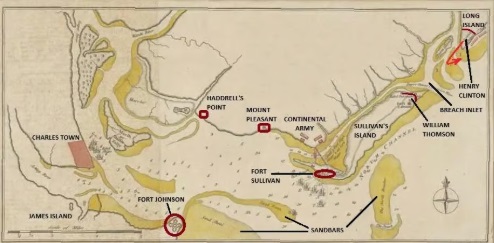
Yeah, both Sullivan's Island and the Isle of Palms to the northeast had nice quite beaches until as recently as 10 years ago.
Over the last 20 years, Charleston has been again threatened by Yankees, and this time they HAVE successfully invaded. Yankee refugees, some perhaps ancestors of those present in Colonial America, most not, have fled from the Totalitarianism in the northeast rather than fighting back with their grievances, as the American patriots did so long ago. It's a slightly different situation, as many of these Yankee refugee are themselves the reason they have grievances to begin with. Now the beaches on Sullivan's Island and the Isle of Palms are filled umbrella to umbrella with these people, and it looks like it might as well be New Jersey.***
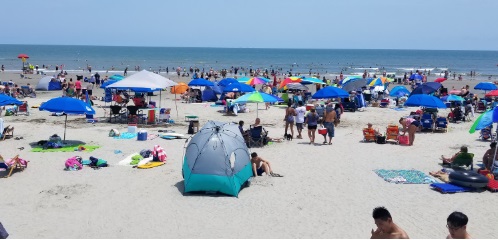
I don't know if there were any telephoto lens tricks involved here, but I can tell you it's very crowded there.
... uhhh, back to our story, I'm just paraphrasing the ZH article anyway, but this was history I did learn long ago.
The article notes that the British had planned to invade by wading across the Breach Inlet separating the Isle of Palms from Sullivan's Island. Scouts had thought that sandbars allowed for no more than 18" of water at low tide, but they were mistaken. (This is an area where once can see dolphins these days.) Instead, the British fired on Fort Sullivan, now Fort Moultrie, from their ships.
On the same day that Thomas Jefferson and his committee presented the first draft of the Declaration of Independence to John Hancock.
On the morning of June 28, Parker found sea and weather conditions ideal for an attack. He signaled the fleet to weigh anchor, loosen their sails, and begin their advance, setting in motion Moultrie’s frantic dash back to the fort.
HMS Thunder dropped anchor and fired the opening shots. Within minutes, all nine warships unleashed a thunderous cannonade at the unfinished fort.
The bombardment, however, produced an unexpected result. Instead of splintering into deadly shards, the soft, sponge-like palmetto logs absorbed the cannon’s impact. British officers later acknowledged that the unusual construction made the fort far more resilient than anticipated.
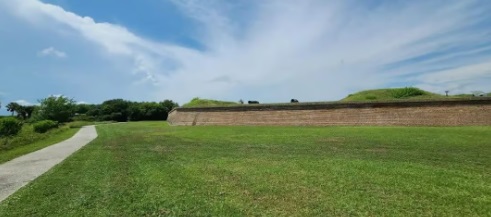
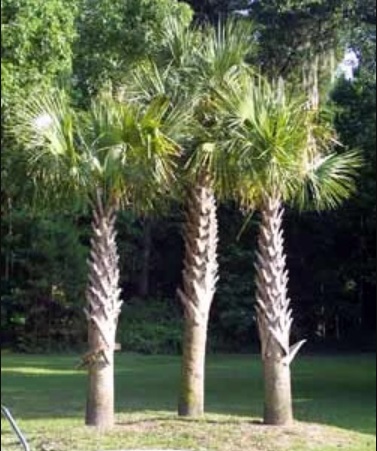
Palmetto obviously means "little Palm". The trees are normally shorter than palms, but the big difference is the spiky "bootjacks" that line the lower trunks of Palmetto trees.
The South Carolinians fought back, in this 10 hour artillery battle.
Moultrie’s men fired slowly and deliberately to avoid using up the fort’s limited supply of powder. Their carefully aimed shots inflicted heavy damage on the attacking ships, especially Parker’s flagship, HMS Bristol, which suffered extensive casualties. Nearly every officer on its quarterdeck was killed or wounded. Parker was among the wounded when an American shot tore away part of his uniform, leaving his backside exposed.
Also wounded aboard Bristol was Lord William Campbell, South Carolina’s deposed royal governor, who had volunteered to serve with a gun crew. Struck by flying splinters, Campbell never fully recovered from his wounds, dying in England two years later.
Enemy fire severed the fort’s flagstaff during the battle. Sgt. William Jasper climbed over the ramparts, recovered the fallen colors under fire, and fastened them to a sponge staff, raising them once more above the fort. His actions became one of the enduring images of the entire war.
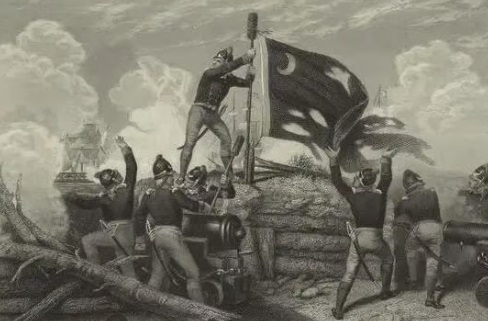
The British fleet withdrew in the evening.
Residents in Charles Town had spent the day anxiously awaiting news. When word arrived that Fort Sullivan still stood, celebrations erupted throughout the city. Even Lee, who had doubted the fort’s chances, praised the defenders. He visited the fort during the battle, observed the men’s calm bravery, and fired several rounds himself before returning to the mainland.This victory has long been commemorated by the State of South Carolina both by its nickname the Palmetto State, and in the blue State Flag.
Americans suffered 37 casualties. British casualties approached 220.
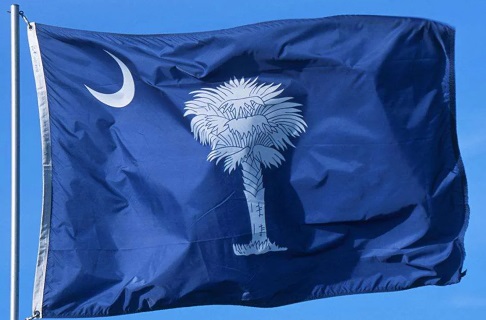
That's the short version of the story of the historic Battle of Sullivan's Island. We have no stupidity to discuss today.
* Does that sound like a type of residential interior molding, or is it the best term for the "America-250" commemoration? The proper term for 2 1/2 centuries is Semiquincentennial, but I neither like that one, nor Sestercentennial, the latter sounding too much like Sesquicentennial, the term for a century and a half. Let's think bigger and use fractions of a Millennium.
** Charles Town, now Charleston of course, was behind Philadelphia, New York City, and Boston, in that order.
*** Folly Island, on the other side of Charles Towne Harbour, to the SW, has been subject to the same invasion. It was also formerly nice and quiet.
Comments:
Moderator
Tuesday - June 30th 2026 1:29PM MST
PS: Haha, Alarmist, I haven't been following Flavia. I would like to know the weather forecast for some other day in Chile in 2013, or maybe '14, not much later though... because I'm guessing she wouldn't be looking quite so good in a bikini.
I watched your French lady giving the weather for Reunion Island. I like here, but II honestly don't know why you need a forecast for one Island in the ocean unless there's a typhoon coming. "Its's gonna be in the 80s, humid as hell, and it'll probably rain in the afternoon." Just film them all in a day for the next year, wearing different skimpy outfits for each day, of course.
I watched your French lady giving the weather for Reunion Island. I like here, but II honestly don't know why you need a forecast for one Island in the ocean unless there's a typhoon coming. "Its's gonna be in the 80s, humid as hell, and it'll probably rain in the afternoon." Just film them all in a day for the next year, wearing different skimpy outfits for each day, of course.
The Alarmist
Tuesday - June 30th 2026 9:03AM MST
PS
It’s the Latina version of a Bat Mitzvah, the partty when a girl hits 15. I figured you’d know it based on your knowledge of Latina culture learned from following Flavia the Weather Babe.
Speaking of weather babe, I wonder how Réunion, a French Department in the Indian Ocean, has more pretty weather babes than all of the UK TV senders, many of whom are switching to weather dudes. Sad.
Here is a sample:
https://youtu.be/aDKWmxMBOtk
It’s the Latina version of a Bat Mitzvah, the partty when a girl hits 15. I figured you’d know it based on your knowledge of Latina culture learned from following Flavia the Weather Babe.
Speaking of weather babe, I wonder how Réunion, a French Department in the Indian Ocean, has more pretty weather babes than all of the UK TV senders, many of whom are switching to weather dudes. Sad.
Here is a sample:
https://youtu.be/aDKWmxMBOtk
Moderator
Tuesday - June 30th 2026 8:21AM MST
PS: "quinceañera" I have never heard of that, Alarmist but the spelling reminds me of quinoa, so I'm thinking of hippies now rather than brown people. Let me look it up.
As for quinoa, I'd thought it was pronounced "chin-oh-ah" rather than "keen-wah" until we started eating that grain, back in our real healthy eating phase, along with cooked barley (pretty good!), cous-cous, etc.
As for quinoa, I'd thought it was pronounced "chin-oh-ah" rather than "keen-wah" until we started eating that grain, back in our real healthy eating phase, along with cooked barley (pretty good!), cous-cous, etc.
Moderator
Tuesday - June 30th 2026 8:18AM MST
PS: Good morning, Adam. The meter didn't work out so well this time in the old Sargent Peppers number. Haha, the highest point in Mt. Pleasant might be 10 ft above sea level - will have to check later.
LOTS more traffic, yes.
LOTS more traffic, yes.
The Alarmist
Tuesday - June 30th 2026 2:55AM MST
PS
I dunno … I kind of like Semiqincentennial. It kind of has a quinceañera ring to it, and with the browning of the USA, that might be fitting, like a quinceañera dress.
🕉
I dunno … I kind of like Semiqincentennial. It kind of has a quinceañera ring to it, and with the browning of the USA, that might be fitting, like a quinceañera dress.
🕉
Adam Smith
Monday - June 29th 2026 9:49PM MST
PS: Good evening, Achmed!
We May Doze, But We Never Close...
(This is a post near and dear to my heart.)
*Folly Beach...
(I've never heard it called Folly Island until right now.)
𝐼𝑡 𝑤𝑎𝑠 𝑎 𝑞𝑢𝑎𝑟𝑡𝑒𝑟 𝑀𝑖𝑙𝑙𝑒𝑛𝑛𝑖𝑢𝑚 𝑦𝑒𝑠𝑡𝑒𝑟𝑑𝑎𝑦.
𝐶𝑜𝑙𝑜𝑛𝑒𝑙 𝑀𝑜𝑢𝑙𝑡𝑟𝑖𝑒 𝑙𝑒𝑑 ℎ𝑖𝑠 𝑏𝑜𝑦𝑠 𝑖𝑛 𝑡ℎ𝑒 𝑓𝑟𝑎𝑦.
𝐹𝑜𝑟𝑡 𝑆𝑢𝑙𝑙𝑖𝑣𝑎𝑛 ℎ𝑎𝑑 𝑃𝑎𝑙𝑚𝑒𝑡𝑡𝑜 𝑙𝑜𝑔𝑠 𝑓𝑜𝑟 𝑠𝑡𝑦𝑙𝑒.
𝑇ℎ𝑒𝑦 𝑐𝑜𝑢𝑙𝑑 𝑐𝑎𝑡𝑐ℎ 𝑎 𝑐𝑎𝑛𝑛𝑜𝑛 𝑏𝑎𝑙𝑙 𝑓𝑟𝑜𝑚 ℎ𝑎𝑙𝑓 𝑎 𝑚𝑖𝑙𝑒.
𝑆𝑜 𝑙𝑒𝑡 𝑚𝑒 𝑖𝑛𝑡𝑟𝑜𝑑𝑢𝑐𝑒 𝑡𝑜 𝑦𝑜𝑢,
𝑓𝑟𝑜𝑚 𝐶ℎ𝑎𝑟𝑙𝑒𝑠 𝑇𝑜𝑤𝑛𝑒 𝑐𝑟𝑜𝑠𝑠 250 𝑦𝑒𝑎𝑟𝑠.
𝐼𝑡'𝑠 𝑊𝑖𝑙𝑙𝑖𝑎𝑚 𝑀𝑜𝑢𝑙𝑡𝑟𝑖𝑒 𝑎𝑛𝑑 𝑡ℎ𝑜𝑠𝑒 𝐵𝑟𝑖𝑡𝑖𝑠ℎ 𝑡𝑒𝑎𝑟𝑠....
Pretty good...
(Smile-face-emoji.jpg)
I've never been to this part of South Carolina, but I have it on very good authority that Mount Pleasant is 𝐧𝐨𝐭 very mountainous.
And I hear there is a lot more traffic then there used to be.
(Peace Sign Ascii...) ☮️
PS: Check this out...
https://gemini.google.com/share/a951cb9eaf16?skid=213ad5a7-5e35-4f73-a6ca-ae7fe20fa0c6
(It's short. And it's fun!)
Cheers! ☮️
We May Doze, But We Never Close...
(This is a post near and dear to my heart.)
*Folly Beach...
(I've never heard it called Folly Island until right now.)
𝐼𝑡 𝑤𝑎𝑠 𝑎 𝑞𝑢𝑎𝑟𝑡𝑒𝑟 𝑀𝑖𝑙𝑙𝑒𝑛𝑛𝑖𝑢𝑚 𝑦𝑒𝑠𝑡𝑒𝑟𝑑𝑎𝑦.
𝐶𝑜𝑙𝑜𝑛𝑒𝑙 𝑀𝑜𝑢𝑙𝑡𝑟𝑖𝑒 𝑙𝑒𝑑 ℎ𝑖𝑠 𝑏𝑜𝑦𝑠 𝑖𝑛 𝑡ℎ𝑒 𝑓𝑟𝑎𝑦.
𝐹𝑜𝑟𝑡 𝑆𝑢𝑙𝑙𝑖𝑣𝑎𝑛 ℎ𝑎𝑑 𝑃𝑎𝑙𝑚𝑒𝑡𝑡𝑜 𝑙𝑜𝑔𝑠 𝑓𝑜𝑟 𝑠𝑡𝑦𝑙𝑒.
𝑇ℎ𝑒𝑦 𝑐𝑜𝑢𝑙𝑑 𝑐𝑎𝑡𝑐ℎ 𝑎 𝑐𝑎𝑛𝑛𝑜𝑛 𝑏𝑎𝑙𝑙 𝑓𝑟𝑜𝑚 ℎ𝑎𝑙𝑓 𝑎 𝑚𝑖𝑙𝑒.
𝑆𝑜 𝑙𝑒𝑡 𝑚𝑒 𝑖𝑛𝑡𝑟𝑜𝑑𝑢𝑐𝑒 𝑡𝑜 𝑦𝑜𝑢,
𝑓𝑟𝑜𝑚 𝐶ℎ𝑎𝑟𝑙𝑒𝑠 𝑇𝑜𝑤𝑛𝑒 𝑐𝑟𝑜𝑠𝑠 250 𝑦𝑒𝑎𝑟𝑠.
𝐼𝑡'𝑠 𝑊𝑖𝑙𝑙𝑖𝑎𝑚 𝑀𝑜𝑢𝑙𝑡𝑟𝑖𝑒 𝑎𝑛𝑑 𝑡ℎ𝑜𝑠𝑒 𝐵𝑟𝑖𝑡𝑖𝑠ℎ 𝑡𝑒𝑎𝑟𝑠....
Pretty good...
(Smile-face-emoji.jpg)
I've never been to this part of South Carolina, but I have it on very good authority that Mount Pleasant is 𝐧𝐨𝐭 very mountainous.
And I hear there is a lot more traffic then there used to be.
(Peace Sign Ascii...) ☮️
PS: Check this out...
https://gemini.google.com/share/a951cb9eaf16?skid=213ad5a7-5e35-4f73-a6ca-ae7fe20fa0c6
(It's short. And it's fun!)
Cheers! ☮️
𝑊𝑒 𝑀𝑎𝑦 𝐷𝑜𝑧𝑒, 𝐵𝑢𝑡 𝑊𝑒 𝑁𝑒𝑣𝑒𝑟 𝐶𝑙𝑜𝑠𝑒...
https://bertsmarket.com/
𝑀𝑜𝑢𝑛𝑡 𝑃𝑙𝑒𝑎𝑠𝑎𝑛𝑡, 𝑆𝑜𝑢𝑡ℎ 𝐶𝑎𝑟𝑜𝑙𝑖𝑛𝑎, 𝑓𝑒𝑎𝑡𝑢𝑟𝑒𝑠 𝑎 𝑣𝑒𝑟𝑦 𝑓𝑙𝑎𝑡 𝑐𝑜𝑎𝑠𝑡𝑎𝑙 𝑡𝑒𝑟𝑟𝑎𝑖𝑛. 𝑇ℎ𝑒 ℎ𝑖𝑔ℎ𝑒𝑠𝑡 𝑝𝑜𝑖𝑛𝑡 𝑖𝑛 𝑡ℎ𝑒 𝑡𝑜𝑤𝑛 𝑖𝑠 𝑟𝑜𝑢𝑔ℎ𝑙𝑦 20 𝑓𝑒𝑒𝑡 (6 𝑚𝑒𝑡𝑒𝑟𝑠) 𝑎𝑏𝑜𝑣𝑒 𝑠𝑒𝑎 𝑙𝑒𝑣𝑒𝑙, 𝑤𝑖𝑡ℎ 𝑎 𝑡𝑜𝑤𝑛-𝑤𝑖𝑑𝑒 𝑎𝑣𝑒𝑟𝑎𝑔𝑒 𝑒𝑙𝑒𝑣𝑎𝑡𝑖𝑜𝑛 𝑟𝑎𝑛𝑔𝑖𝑛𝑔 𝑏𝑒𝑡𝑤𝑒𝑒𝑛 10 𝑎𝑛𝑑 13 𝑓𝑒𝑒𝑡.
Mrs. Smith used to put quinoa and amaranth in her bread back when she was using the bread maker. Lately, she's been making sour dough bread, so she hasn't been adding the seeds. (While quinoa and amaranth are commonly referred to as ancient grains and sometimes as protocereals, they are actually seeds. But hey, they're gluten free!)
Cous-cous? That's just pasta.
☮️